


Hamilton Collections Gallery | The Franklin Institute
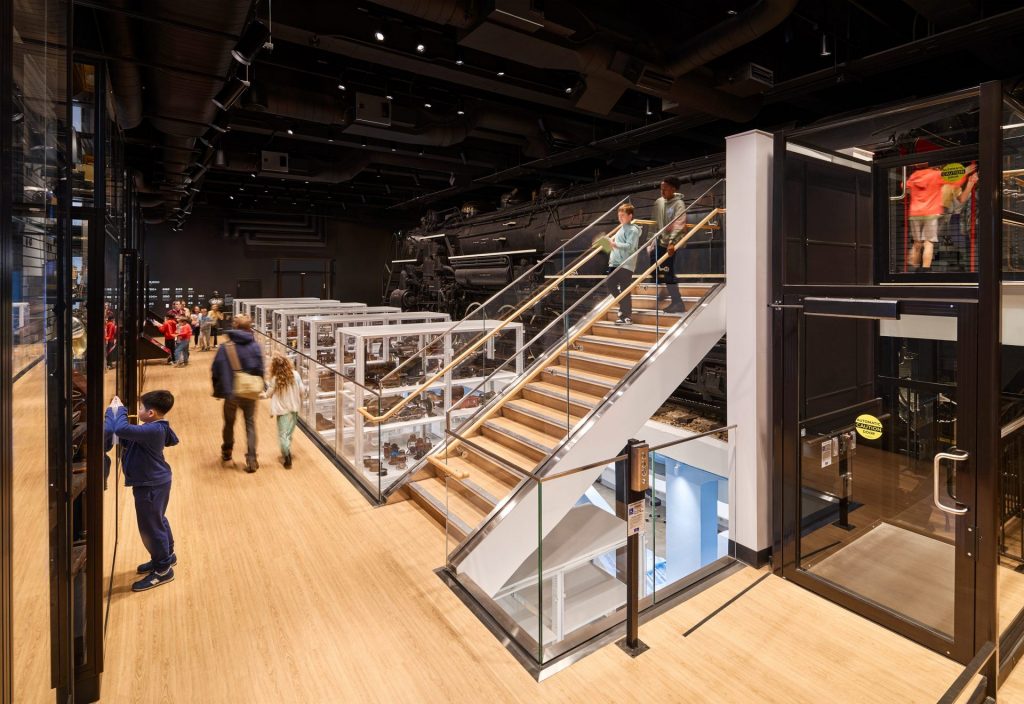
As part of The Franklin Institute’s comprehensive campus transformation, the Hamilton Collections Gallery reimagines one of Philadelphia’s most iconic museums for the next generation of learners. Housed within the historic “Train Factory” hall, the project transforms 9,000train room into a two-story gallery (13,000SF for the entire project including the mezzanine work) that invites visitors behind the scenes to explore the museum’s vast and rarely seen collection of scientific artifacts. At the heart of the renovation stands the 350-ton Baldwin locomotive – on display since 1933 – now surrounded by a dynamic new space that offers visitors a view of the museum’s collections from both the main floor and a new lower-level storage and interpretation suite. The design required the creation of a large floor opening adjacent to the locomotive to allow visual connection between levels while maintaining the structural integrity of the existing framing and exhibit infrastructure. In addition, it exposed the original public viewing of the original structure that supports the large train.
Keast & Hood provided structural engineering services for the renovation, including the design and reinforcement of floor openings, coordination with exhibit loads and pathways, and structural supports for new mechanical systems serving the gallery. The team also designed dunnage framing on an existing mezzanine that was reinforced for a new AHU and evaluated existing framing to accommodate updated HVAC and lighting systems. Additional scope included the creation of a new ADA accessible pathway for visitors to enter the locomotive in the form of a new stair and wheelchair lift, and analysis of rigging points for the adjacent Space exhibit, where future installations and exhibit components will require specialized structural support. Completed in 2024, the Hamilton Collections Gallery marks the first phase of The Franklin Institute’s master plan for campus renewal. The renovation thoughtfully balances respect for the 1930s Classical Revival structure with contemporary museum design -preserving the character of the beloved institution while opening a new window into the science, stories, and spirit of discovery that define it.